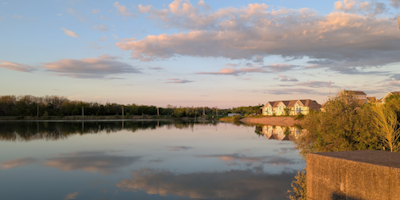
UB Campus Living
UB Campus Living is the division of the University at Buffalo (UB) that manages on-campus student housing, including all residence halls and apartment complexes at the university between North Campus and South Campus. As UB's official housing and residential life department, Campus Living provides accommodation and residential services for approximately 7,500 students who live on campus.[1] It oversees both the traditional undergraduate residence halls and the university-operated apartment villages, striving to create a safe and supportive living-learning environment for students. Campus Living is an auxiliary, self-supporting unit of UB - like other SUNY residence hall programs, it operates on student housing fees and covers its own expenses (including maintenance and debt service) without direct state funding.[2]
The department is part of UB's Division of Student Life, and its structure includes Residential Life (focused on student development and residence hall community) and Housing Operations (focused on facilities, assignments and services). Senior leadership of Campus Living consists of directors for housing operations and residential life - for example, as of July 2025, Gary Thompson served as Director of Housing Operations, and Dr. Brian Haggerty, PhD, as Director of Residential Life.[3] The unit employs professional staff such as live-in Residence Hall Directors and Apartment Directors for each residence, as well as paraprofessional student staff (such as Resident Advisors and Community Assistants) who assist in managing the residential communities.
History and Development
[edit | edit source]UB did not always have on-campus housing - for over a century after the university's founding in 1846, students largely lived off campus. The first on-campus dormitories opened in 1953, when three residence halls - Schoellkopf, MacDonald, and Cooke Hall (later renamed Pritchard Hall) - were built on the South Campus. This marked the beginning of residential life at UB. In the 1950s, campus living was strictly regulated - men and women lived in separate halls, with rules such as nightly curfews, mandatory dorm meetings, dress codes (such as forbidding jeans on Sundays), and even limits on snacks (one handbook allowed only "candy and cigarettes" in the lounge).[4] Despite the strict rules, these early dorms were seen as an experiment in community living that successfully fostered campus unity and school spirit.
UB's residential capacity expanded significantly in the late 1960s and early 1970s alongside the development of the new North Campus in Amherst, New York. By the early 1970s, the university had opened multiple residence halls on the North Campus while continuing housing on the South Campus. The North Campus included the creation of the sprawling Ellicott Complex (a unique "mega-dorm" comprising of six linked quadrangles of residence hall buildings, opened in the 1970s) and the Governors Complex of dorms. With these additions, UB evolved into a two-campus university with student housing on both. The Ellicott Complex, in particular, became one of UB's largest living areas.
Over the decades, UB continued to add and update housing - in 1960, Goodyear Hall was completed, and in 1964, Clement Hall was completed. In the late 1990s and early 2000s, townhouse-style and apartment-style options emerged, including the introduction of apartment-style living spaces such as Hadley Village, South Lake Village, and Flint Village, providing students with more independent on-campus housing alternatives. In 2011, UB opened William R. Greiner Hall, a state-of-the-art sophomore residence hall on North Campus featuring suite-style dorms and additional amenities not present in other residence halls. Uniquely, the apartment-style living units (all apartment villages) and Greiner Hall are owned by the UB Foundation, not the University at Buffalo itself.
In the late 2010s to early 2020s, Campus Living undertook major renovations and realignments of its housing stock. For example, MacDonald, Pritchard (formerly Cooke), and Schoellkopf Halls were demolished in 2018.[5] Notably, UB temporarily closed its two remaining traditional dormitories on the South Campus - Clement Hall and Goodyear Hall - for the 2022-2023 academic year to carry out extensive renovations. With these renovations complete, UB once again houses students on the South campus. Additionally, "The Landing" was also added to the Ellicott Complex to add a more welcoming front entrance.[6]
Housing System and Facilities
[edit | edit source]Today, UB Campus Living manages a mix of traditional dormitory-style halls and apartment complexes across the North and South Campuses. On the North Campus (Amherst), major residence facilities include the Ellicott Complex, the Governors Complex, and Greiner Hall (owned by the UB Foundation). North Campus is also home to several apartment villages - Flint Village, South Lake Village, Hadley Village, and Creekside Village (all also owned by the UB Foundation). An additional graduate/family housing community, Flickinger Court Apartments, is located just off North Campus - it offers two-bedroom apartments and permits non-student family members to live with students.[7] On the South Campus (Main Street, Buffalo), Campus Living operates two traditional residence halls - Clement and Goodyear - which primarily house first-year students in corridor-style arrangements. Each residence hall or apartment complex has its own staff and council, and in total, there are roughly 17 distinct residence halls and apartment complexes under Campus Living's view, each contributing representatives to the Residence Hall Association (the student governing body for campus residents).[1]
All UB on-campus housing is fully furnished and utilities (electricity, heat, water, internet) are included in the room license fee. Most traditional dorms have shared double or triple rooms, with communal bathrooms, lounges, study spaces, and other amenities available. Apartment units typically have private bedrooms with private apartment kitchens (one kitchen per apartment), bathrooms, and living areas. A few specialized living options exist - for example, Governors Complex and Ellicott Complex house several Living-Learning Communities (LLCs) such as Leadership House, where students with common interests (like leadership development, honors, etc) live together and participate in specialized programs.
Campus Living also provides housing accommodations such as break housing for students who need to stay during breaks. Room and board rates at UB vary by hall/room type - for example, in 2025-2026 a standard Ellicott double dorm costs about $10,073.28 per academic year (about 8 months)[8], not including board/meals (first-year students living on campus are required to get the Flex 14 or Flex 19 meal plan, which will cost at least an additional $7,500 - so room and board would be $17,500+ in this case).[9] Campus Living's operations are financially self-sustaining - student rents fund the maintenance, staffing, and debt payments for facilities. The SUNY Dormitory Authority issues bonds to finance major construction/renovation projects for residence halls, which UB repays using housing revenue, as the Residence Hall program receives no taxpayer support.[2]
Housing Master Plan and Recent Initiatives
[edit | edit source]In 2017, the University at Buffalo initiated a comprehensive Housing Master Plan to guide the evolution of campus residences over the subsequent decade. The master plan, developed with consultants (including planning firm Sasaki Associates), assessed UB's existing housing stock and envisioned future improvements and expansions to better meet student needs. A key goal of the plan is to provide a "unique and memorable living experience" in an efficient manner. The plan's recommendations included adding significant new housing capacity on the North Campus (on the order of 3,380 new student beds while retiring or renovating aging facilities). One concept is to transform an open tract of land near the academic core (dubbed "Parcel B") into a vibrant mixed-use residential district featuring modern housing integrated with academic and innovation spaces. At the same time, the plan calls for the strategic renewal of the Ellicott Complex, reorienting the 1970s-era complex to create community "heart" spaces in each quad and generally modernize the facilities. Upgrades such as adding interior social/study spaces and improving wayfinding are meant to reinforce Ellicott's original vision as a self-contained residential village, while addressing its design challenges. The master plan also mentions achieving LEED Gold certification and "an open space network of pedestrian-scaled streets, plaza, and green spaces" across the site of 235 acres.[10]

Steps from the housing master plan have already been realized. The "Landing at Ellicott" project, launched in 2023, is the first major renovation under the plan. This $21 million project redesigned the entrance of the Ellicott Complex's Fargo Quad to serve as a welcoming "front door" and community space for the entire Ellicott residence hall complex. Administrators moved forward with this project after years of student and staff feedback about Ellicott's confusing layout and lack of a clear entry point, especially problematic in harsh Buffalo winters. Brian Haggerty, UB's Interim Director of Housing Operations, explained that the goal is to create a warm, inviting lobby - akin to a "living room" - where incoming students, families, and visitors can easily orient themselves. The Landing at Ellicott includes new indoor social/study lounges, a centralized welcome center, improved doorways and signage, and exterior plaza improvements to make the Fargo Quad a true gateway. Demolition and construction began in Summer 2023, and the new entrance was on track for completion by Fall 2024.[11]
Recent years also saw substantial renovations to aging South Campus dormitories. In 2022-2023 Clement and Goodyear Halls were closed for upgrades and then reopened, providing modernized facilities for first-year students. These projects addressed issues in the older buildings and allowed UB to continue offering housing on the historic South Campus, which had temporarily ceased during the renovation period.[4]
Paraprofessionals and Advocacy Issues
[edit | edit source]Campus Living not only provides buildings and services, but also oversees the residential community experience - which relies heavily on student resident staff known as paraprofessionals (also known as "parapros"). Paraprofessional staff at UB include Resident Advisors (RAs) in the dorms, Community Assistants (CAs) in on-campus apartments, and Academic Assistants (AAs) who support living-learning communities. These students live in the residences and act as peer mentors, community builders, and first responders for issues ranging from roommate conflicts to emergency situations. UB's paraprofessionals are expected to be on duty regularly (often overnight shifts), hold floor meetings and educational programs, and be available to help residents about 10 hours per week, all while maintaining their own course loads. In exchange, RAs/CAs receive compensation primarily in the form of free on-campus housing (a single room in a dorm or a single bedroom apartment) and partial coverage of a meal plan, plus a modest stipend each semester. For example, during the 2022-2023 academic year, received a stipend of about $560 per semester (with slightly higher stipends for those with multiple years of service).[12]
In Fall 2023, UB's Campus Living faced public criticism from an anonymous coalition of its paraprofessional staff due to labor and safety concerns. A group of RAs and CAs calling themselves "enFOCUS" wrote an open letter to university administrators alleging that UB's policies were putting "lives at risk" and exploiting paraprofessionals. The letter, which was published in The Spectrum (UB's student newspaper) and posted on Reddit, enumerated several grievances. It criticized Campus Living for inadequate compensation, noting that when factoring in all hours worked, the stipend plus room/board amounted to an effective wage of only about $3.61 per hour. It also condemned the cutting of meal plan benefits (the included RA meal swipes had been halved each year for three years straight, according to the letter). The paraprofessionals further cited safety issues, such as being required to remain on duty during the historic blizzard of December 2022, which they claimed endangered staff, and not being provided with Narcan (an essential kit for opioid overdoses) despite dealing with medical emergencies. Another issue was the premature opening of South Campus dorms after renovation, which the letter said forced RAs into buildings that were not fully ready.[12]
The enFOCUS letter caused a response. It was sent to top administrators including the UB President and Vice President for Student Life, and within days signs appeared around campus stating "Where is our contract, Campus Living?" and even the university's iconic bull statue was painted with the message "Parapros have had enough!!!" University officials acknowledged the issues - UB's Dean of Students and other Student Life staff scheduled open forums with the RAs/CAs to hear their concerns. In a gesture of goodwill, Campus Dining and Shops offered one evening of free meals to paraprofessional staff at certain dining halls - a small concession that had not occurred in prior semesters. Administrators praised the hard work of RAs and CAs and expressed "appreciation" for their balancing of academics and job duties, but concrete commitments were limited. As of late 2023, UB stated it had begun "discussing and addressing" the concerns, but the paraprofessionals did not have a labor contract or union recognition (nor had any formal union petition been filed).[12]
Residential Life Programs and Student Experience
[edit | edit source]Beyond housing, Campus Living encompasses residential life programs intended to foster student growth, academic success, and a sense of community. Each residence hall floor or apartment community has RAs who organize educational programs, social events, and peer support. Campus Living collaborates with other campus services to provide on-site academic tutoring, faculty-in-residence mentorship, and living-learning communities that integrate classroom and residential experiences. For example, first-year students can opt into themed housing like the Leadership House or STEM communities, where programming is tailored to those interests. According to the Residential Life interim director Meegan Hunt, on-campus living can boost student success by connecting students to resources (academic advising, counseling, etc) more readily, and by providing informal support networks that help students persist to graduation. Campus Living staff emphasize safety and personal development, with a priority of ensuring students are safe and supported, after which they encourage participation in community events that range from small hall gatherings (like study groups or movie nights) to larger traditions.[4]
A signature of UB's residential life is the active role of the Residence Hall Association (RHA). RHA is the student governing body representing all on-campus residents, and it works closely with Campus Living to advocate for students' needs and to host engagement programs. RHA's motto, "making resdients into leaders and halls into homes," encapsulates the organization's dual role in leadership development and community-building. With delegates from each hall and village council, RHA communicates student concerns (such as dining hours, facilities issues, etc) to Campus Living administrators and often collaborates on solutions. The association also throws popular events such as game nights, holiday celebrations, "Not Your Grandma's Bingo," costume night, and more that enliven campus life. In 2020, UB's RHA was recognized nationally when the university was named "School of the Year" by the National Association of College and University Residence Halls (NACURH).[13] This honor - the highest award in the nation for residence hall programming and leadership - reflected UB RHA's excellence in student advocacy and activities. Campus Living supports RHA by providing it with an operating budget (funded by hall fees) and stipends for its student executive board, who receive compensation covering most of their housing costs as an incentive for their service.[1]
References
[edit | edit source]- ↑ 1.0 1.1 1.2 https://www.ubspectrum.com/article/2024/03/rha-election-results
- ↑ 2.0 2.1 https://www.dasny.org/sites/default/files/2020/board/Preliminary%20Official%20Statement%20-DASNY%20SUNY%20Dorms%202020A.pdf
- ↑ https://www.buffalo.edu/campusliving/about-us/staff-directory.html
- ↑ 4.0 4.1 4.2 https://www.buffalo.edu/ubnow/stories/2023/11/residential-life.html
- ↑ https://research.lib.buffalo.edu/campus-planning-construction/timelines
- ↑ https://www.ubspectrum.com/article/2023/09/ellicott-complex-renovations
- ↑ https://www.buffalo.edu/campusliving/find-your-home/special-living-accommodations/family-housing.html
- ↑ https://www.buffalo.edu/campusliving/find-your-home/where-can-i-live/residence-halls/ellicott-complex.html
- ↑ https://myubcard.com/content/mealplans
- ↑ https://www.scup.org/award-winner/university-at-buffalo-university-at-buffalo-housing-master-plan-north-campus/
- ↑ https://www.ubspectrum.com/article/2023/09/ellicott-complex-renovations
- ↑ 12.0 12.1 12.2 https://www.ubspectrum.com/article/2023/09/ub-paraprofessionals-letter
- ↑ https://www.buffalo.edu/campusliving/for-current-students/get-involved/residence-hall-association.html